Valuing signed memorabilia for probate
Memorabilia is one of the harder things to deal with in an estate. It can be worth very little or a great deal, and the person who knew its story is often the one who has died.
This guide is general information, not legal or tax advice. If you are an executor, speak to the solicitor handling the estate or a qualified valuer about your situation.
What the estate needs
For probate, each item generally needs a value on the date of death: what it could reasonably have sold for on the open market at that time. For most household items a sensible estimate is enough. For anything of significant value, a professional valuation gives the executor something to rely on if the figure is ever questioned.
Step one: make an inventory
Before anything is valued, sold or given away, list what is there. For each piece record:
- Photos of the whole item, the signature and any labels or frames.
- Who signed it and anything known about when and where.
- Any certificate, letter, receipt or photo kept with it.
- Where it was found, so paperwork can be matched later.
Keep certificates with the right items. Once a certificate is separated from its piece it is very hard to put them back together with any confidence.
Step two: work out what matters
Most collections contain a few pieces that carry most of the value. Put those aside for a professional opinion and deal with the rest more simply. Signed items with strong provenance, match worn items and pieces from major events are the usual candidates.
Step three: get the right opinion
There are two separate questions, and it helps to keep them apart:
- Is it genuine? That is a question for an independent authentication specialist.
- What is it worth? That is a question for a valuer, an auction house or a specialist dealer.
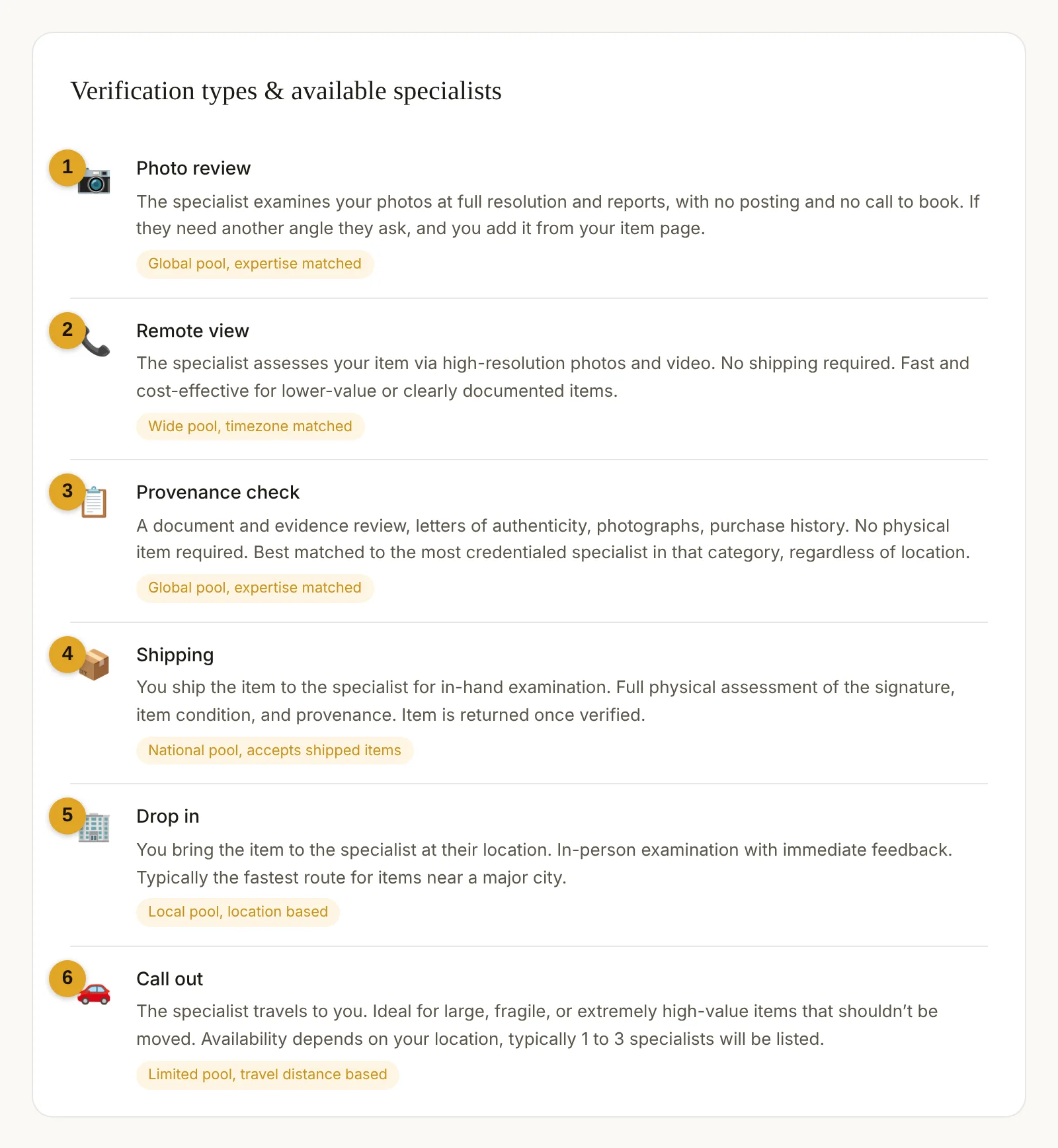
On Cardarooz, verification can be arranged without selling anything, and a provenance check works from documents and photos alone, which can suit an estate where the items are in storage.
Using a Cardarooz collection as the inventory
A collection on Cardarooz can hold the inventory while the estate is being settled: every piece with its photos and documents in one private place. Collector members can download the collection as an insurance schedule, as a PDF or spreadsheet, which works as a ready made list for the solicitor.
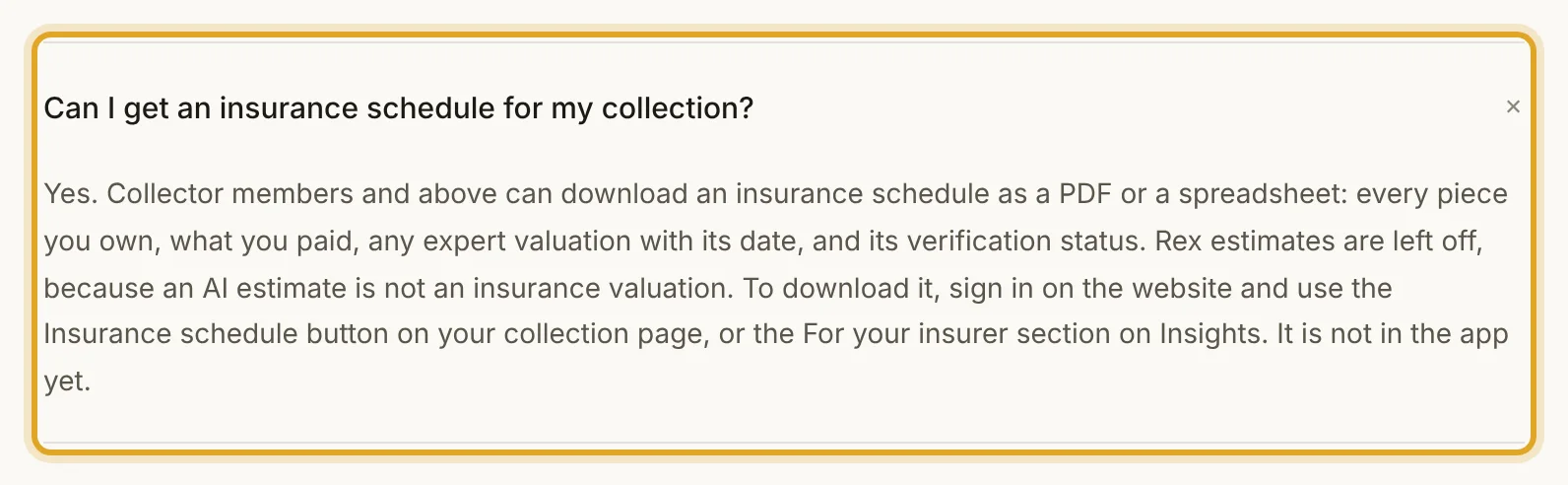
Rex, our AI, can give an estimated market range for a piece. It is a guide, not a valuation, and it should never be used as the probate figure.
If the family wants to keep it
Pieces that stay in the family keep their record. When ownership passes on, the history and any certificate go with the item, so the next generation knows what they have.
Cardarooz is where collectors keep their collection. Catalogue what you own, arrange verification by an independent specialist, and sell when you are ready. Cataloguing is free.
Start an inventory →