What a certificate of authenticity proves, and what it doesn't
Almost every signed item comes with a certificate. Some are worth a great deal. Many are worth nothing at all. The difference is who issued it and whether you can check it.
What a certificate actually is
A certificate of authenticity, or CoA, is somebody's written opinion that an item is genuine. That is all it is. Its value comes entirely from the person or company behind it: their expertise, their independence and whether their records can be checked.
What it does not prove
- That the issuer examined the item. Some certificates are printed by the seller and simply describe what is being sold.
- That it belongs to this item. A paper certificate can be separated from the item it was written for and paired with another one.
- That the issuer is independent. A dealer certifying their own stock has a reason to say yes.
- What the item is worth. Authenticity and value are different questions.
How to check one
- Find the issuer. Do they exist, and do they have a public reputation in this category?
- Look for a certificate number and a way to look it up on the issuer's own website.
- Check the description matches the item exactly, including photos where the issuer keeps them.
- Ask whether the issuer is connected to the seller.
Recognised certificates on Cardarooz
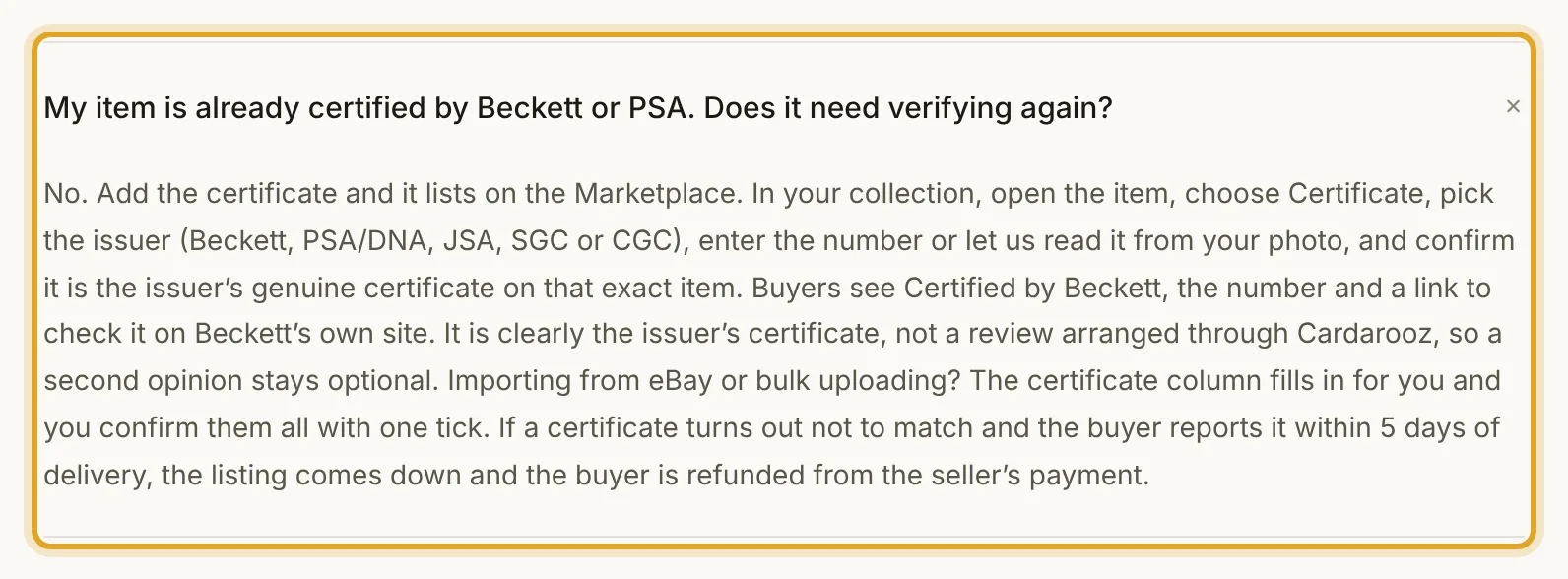
If your item already has a certificate from PSA/DNA, Beckett, JSA, SGC or CGC, you can add it to the item in your collection. Buyers see who issued it and the number, with a link to the issuer's own lookup so they can check it themselves.
A certificate that stays with the item
When you arrange verification through Cardarooz, the result does not end up as a letter in a drawer. A passed verification produces a digital Certificate of Authenticity with its own public page, naming the independent organisation that examined the item, the result and the date.
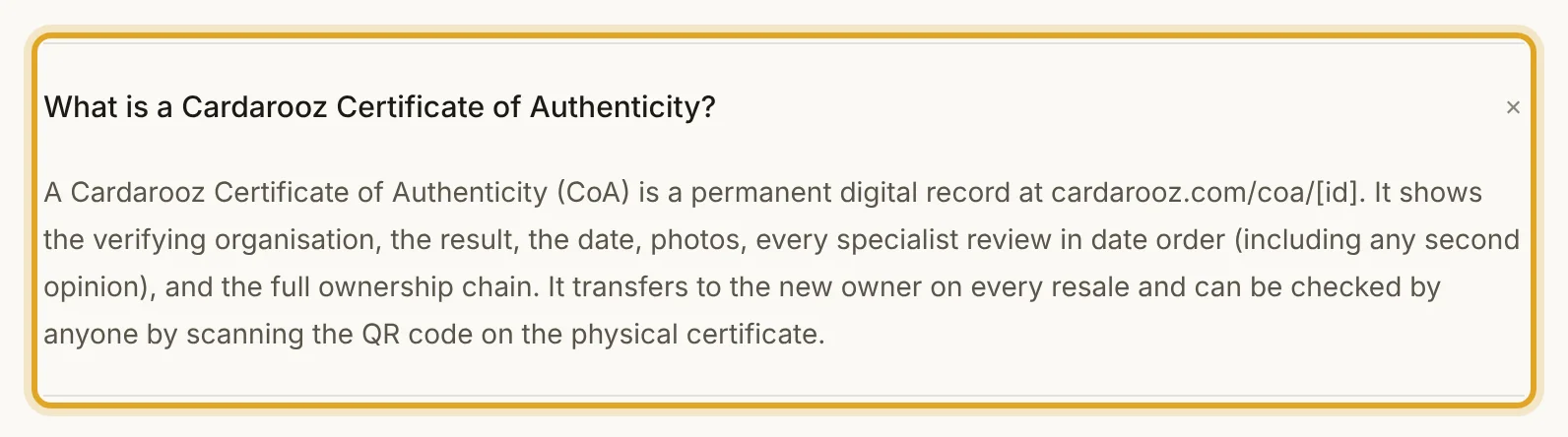
Because the record lives online and moves to each new owner, it cannot be lost or swapped onto a different item when the piece is sold on.
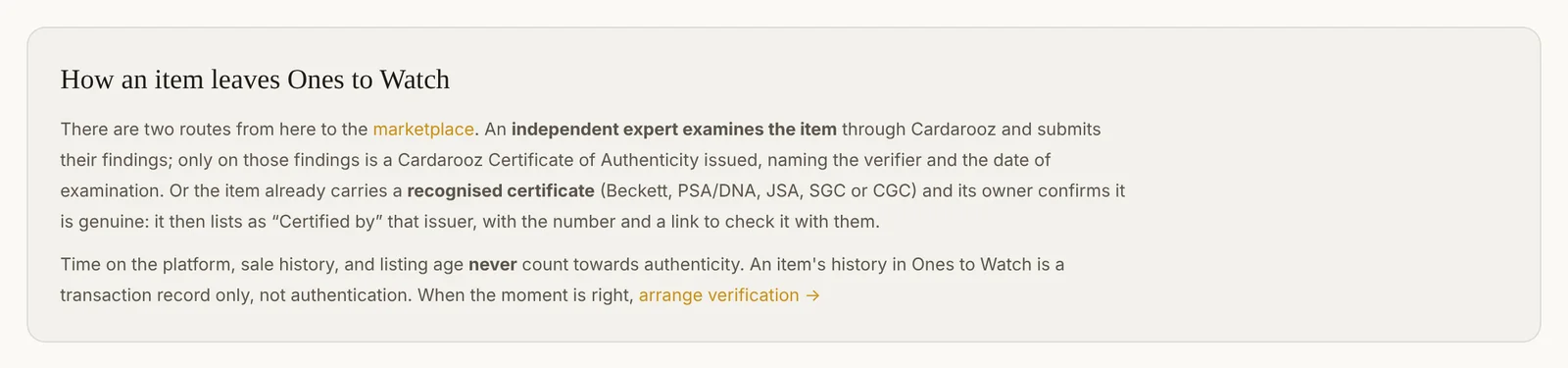
Items on Ones to Watch carry no authenticity claim. Only the verified marketplace shows items examined by an independent specialist or carrying a recognised certificate.
Cardarooz is where collectors keep their collection. Catalogue what you own, arrange verification by an independent specialist, and sell when you are ready. Cataloguing is free.
Add an item and its paperwork →