How to keep provenance with an item when you sell it
Provenance tends to get thinner every time an item is sold. A letter goes missing, a photo stays with the old owner, and the story turns into a line in a listing. It does not have to.
Why it matters
For signed memorabilia, the record is a large part of what is being bought. Two identical shirts are not the same item if one has a photo of the player signing it and the other has nothing. Losing the paperwork on a sale makes the next sale harder for whoever comes after you.
Before you list
- Gather everything: certificates, letters, receipts, photos and any messages about the signing.
- Photograph each document, front and back, so the record survives even if the paper does not.
- Write the story down while you remember it: where it came from, when, and who was involved.
- If the item has a recognised certificate, check the number on the issuer's site before you list.
When you sell on Cardarooz
Everything starts in your collection, so the item, its photos and its documents are already together when you decide to sell. The listing carries that record with it.
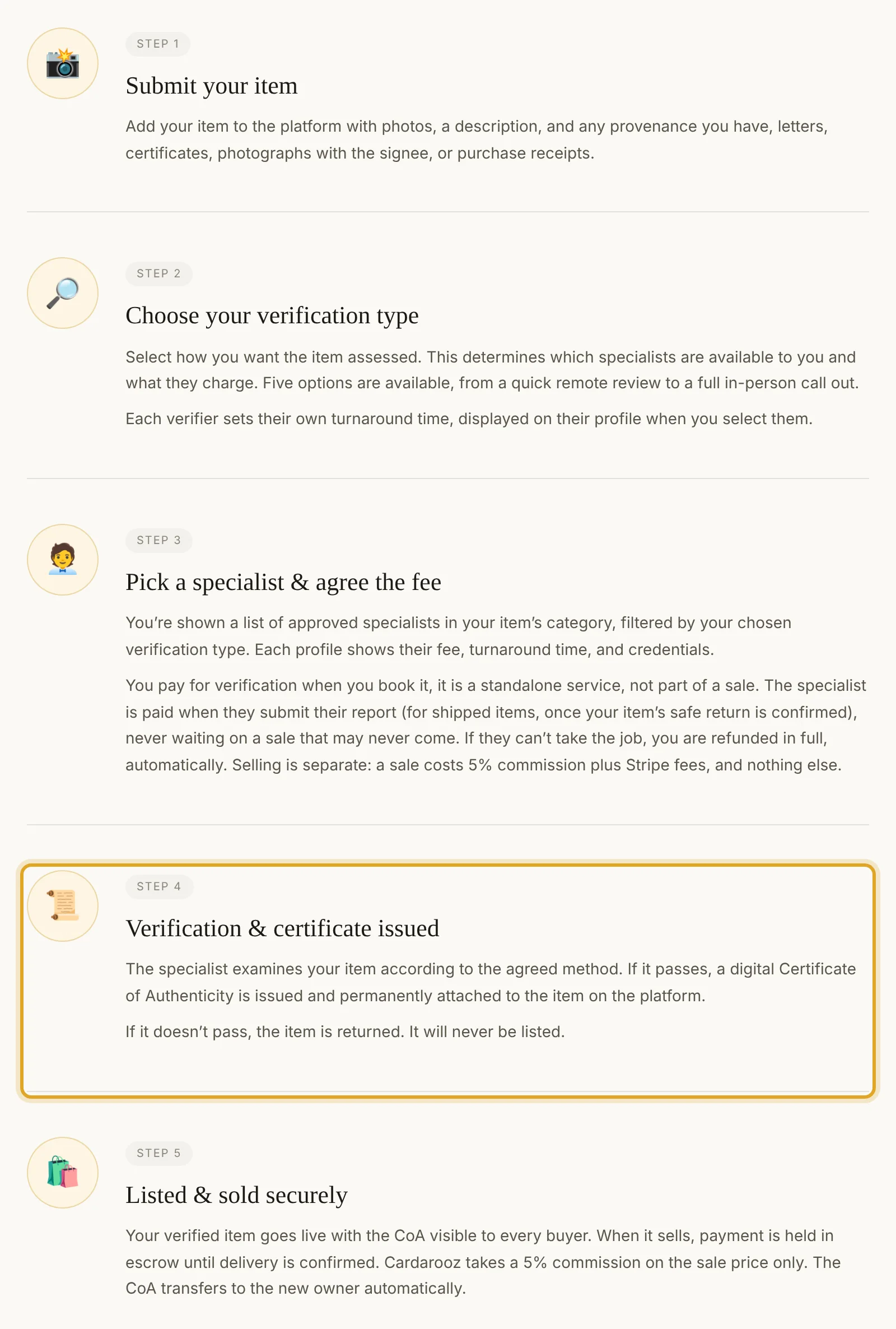
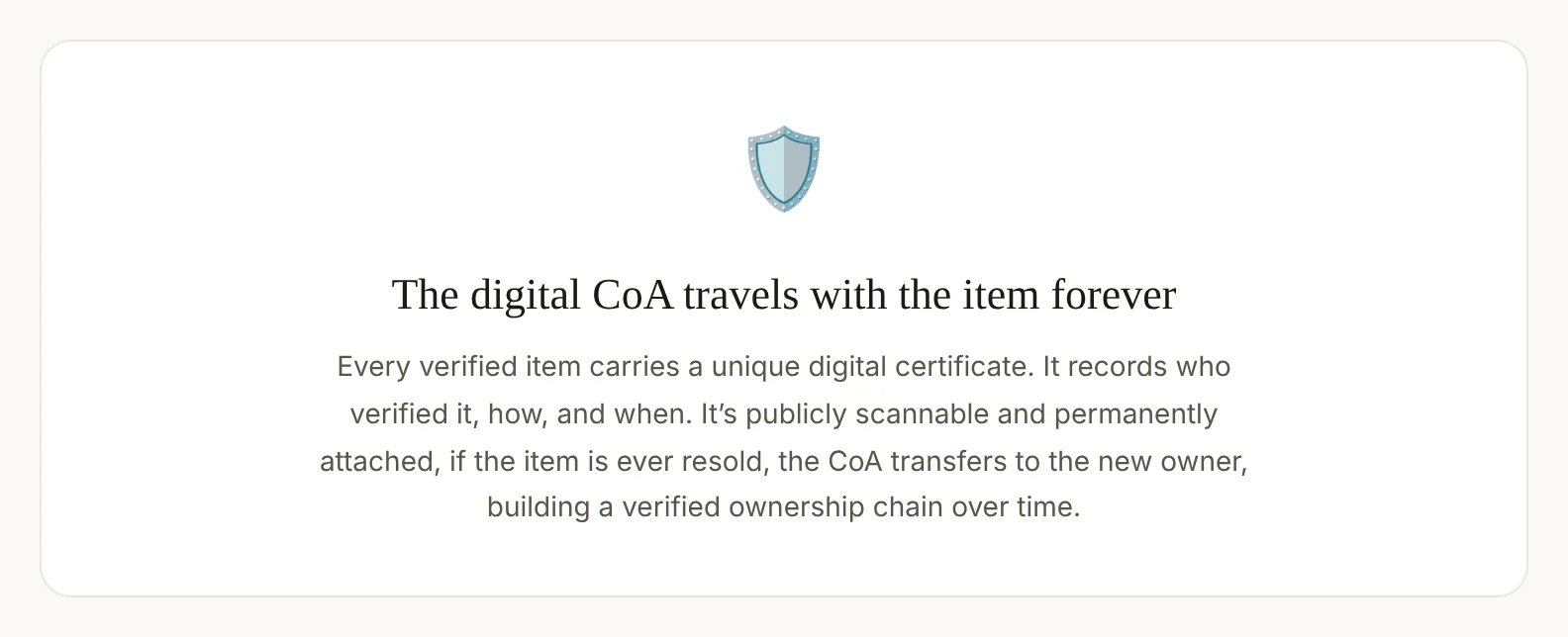
If the item has been examined by an independent specialist through Cardarooz, its digital certificate moves to the buyer on the sale. The ownership chain grows by one, so the next owner inherits a better record than you started with.
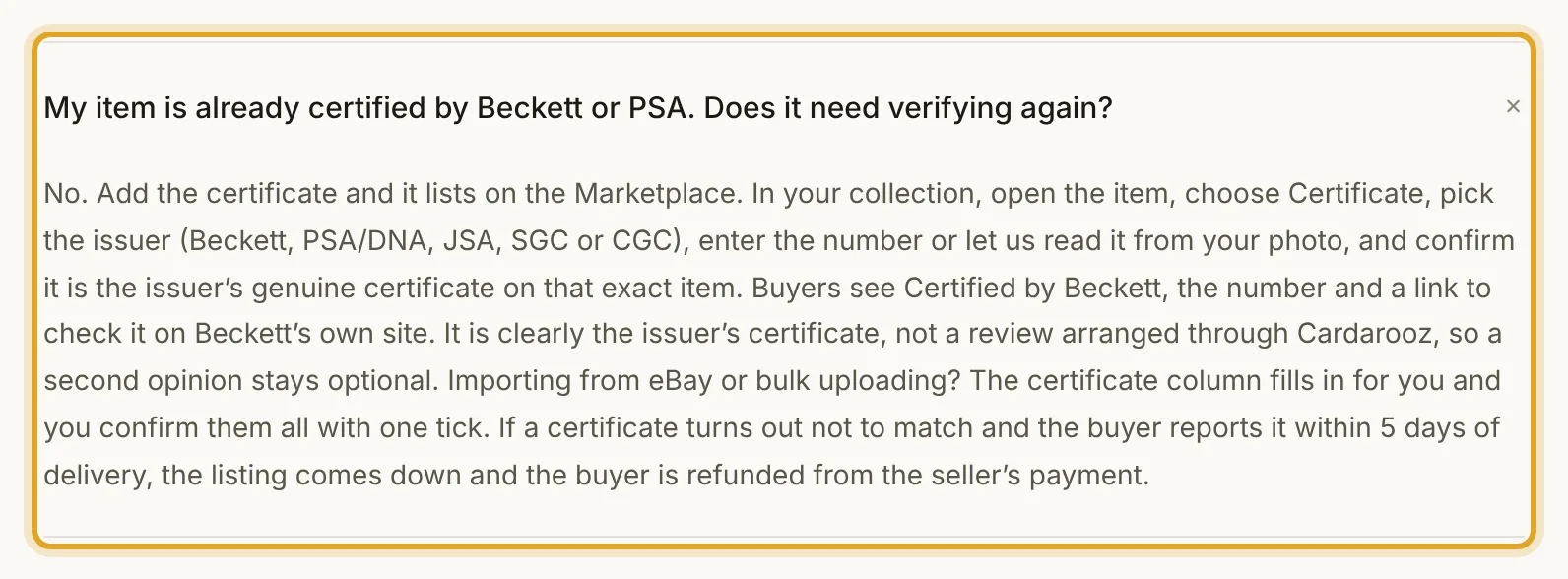
If it carries a recognised certificate from PSA/DNA, Beckett, JSA, SGC or CGC, add it to the item. Buyers see the issuer and the number, with a link to check it.
What selling costs
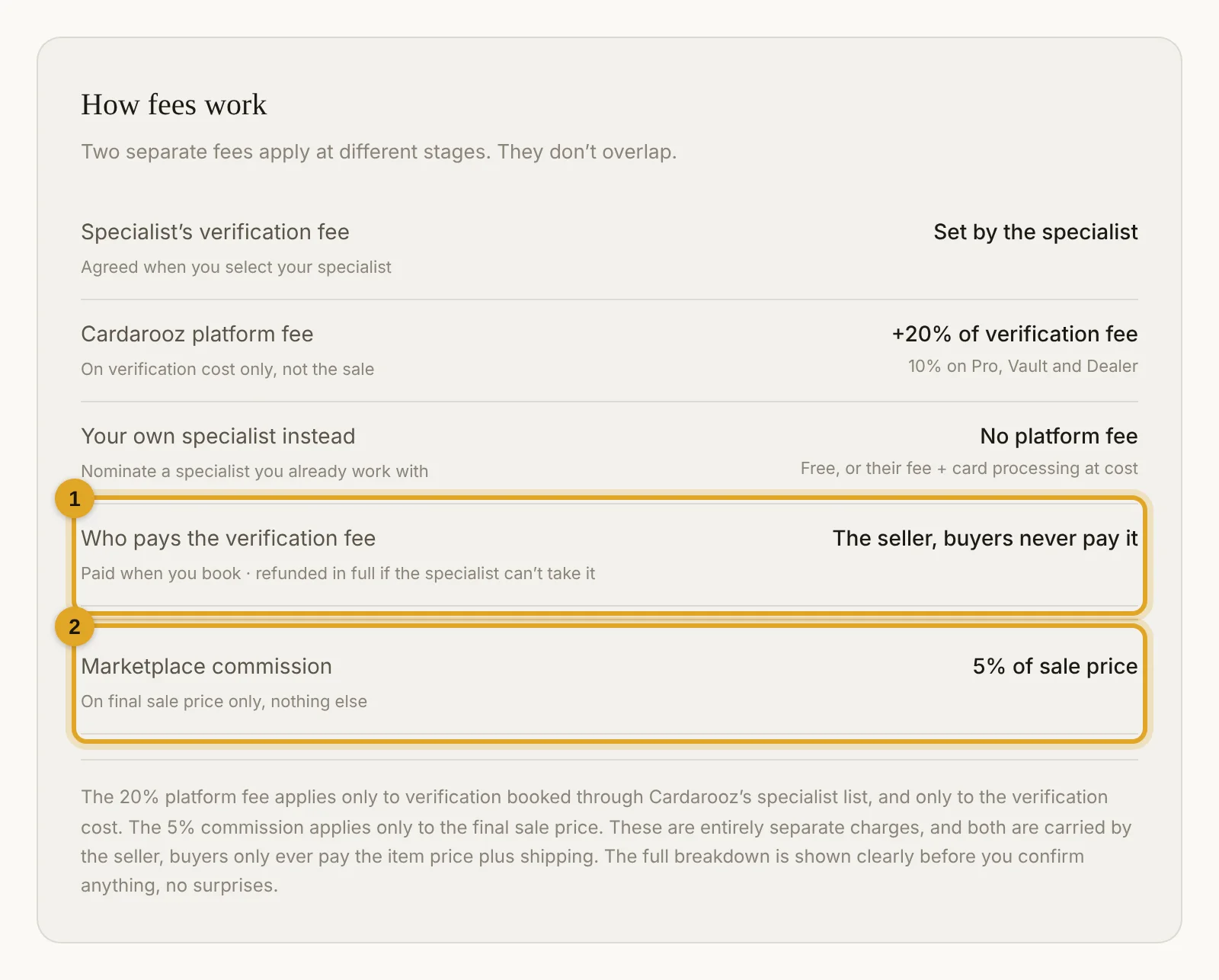
Listing is free. When something sells, Cardarooz takes 5% of the item price, plus card processing. Any verification was paid when you booked it and is never taken from the sale.
Cardarooz is where collectors keep their collection. Catalogue what you own, arrange verification by an independent specialist, and sell when you are ready. Cataloguing is free.
Add the item you plan to sell →